
Want to know how navigate the Victorian Web? Click here.
A Select Committee on Park Walks had suggested in 1833 that providing parks for the poor of London would encourage them to give up drinking houses, dog fight, boxing matches and other debasing pleasures, and instead take up walking, ball games and other healthy pursuits.... — Adam Hart-Davies, p.125
The park movement grew gradually during the 1830s and 1840s as initiatives were taken by central and local government, by benefactors, entrepreneurs and communities. The first park to be called Victoria Park was developed in Bath and opened by the young Princess Victoria in 1830. The Royal Victoria Park was a public park but it was not a municipal park as the land was leased and not owned by the local authority. In London the second Victoria Park was created in the East End, Primrose Hill near Regent’s Park was secured as a public open space, and Parliament took the first steps towards forming Battersea Park. — Hazel Conway, p. 9
London Parks
- Chelsea Physics Garden
- Clissold Park, Stoke Newington
- Green Park (3 views)
- Hampstead Heath (a dozen views)
- Hyde Park (9 views)
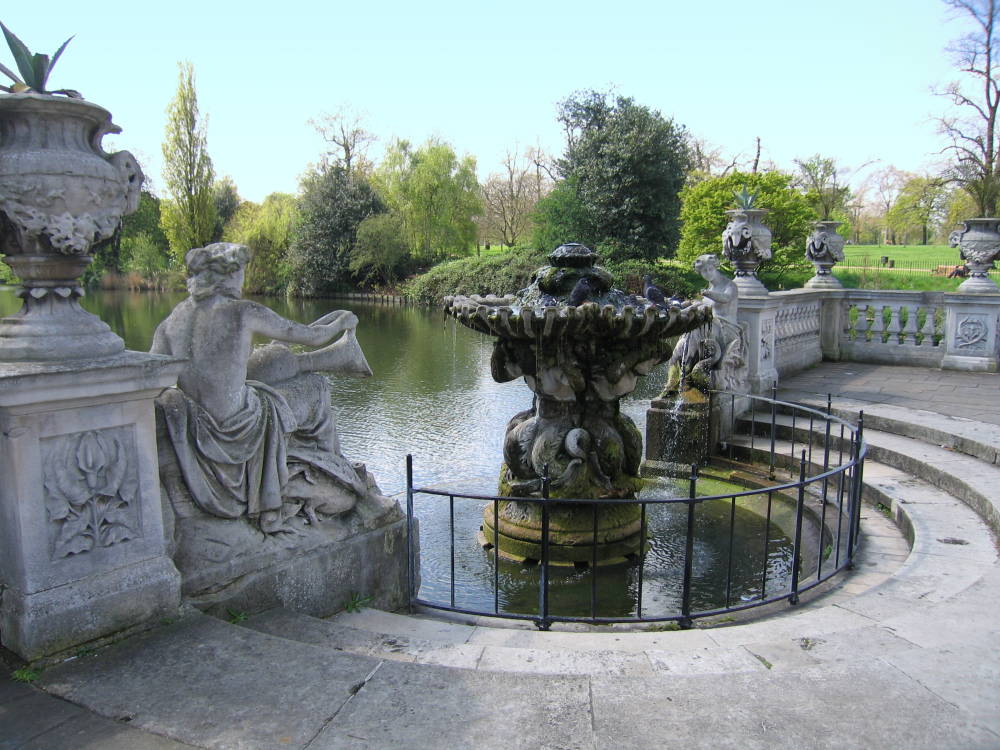
- The Italian Garden in Kensington Gardens
- The Italian Terraces, Crystal Palace, South London
- Postman's Park, London EC1
- Regent's Park
- Vauxhall Gardens
- Victoria Embankment Gardens (2 views)
- Victoria Park
- Victoria Tower Gardens, Westminster
London Cemeteries and Crematoria
The Victorian cemetery was created as a response to a problem, and is as important in the history of urban hygiene as other reforms that have received greater attention: it is also significant in the histories of landscape design and of architectural taste, and is not a separate subject in the context of a consideration of Victorian urban fabric. — James Stevens Curl, p. 284
It took the example of the spacious, landscaped Père Lachaise cemetery in Paris, opened in 1804, to transform the English cemetery movement into a campaign in the 1820s. — Lynn Pearson, p. 5
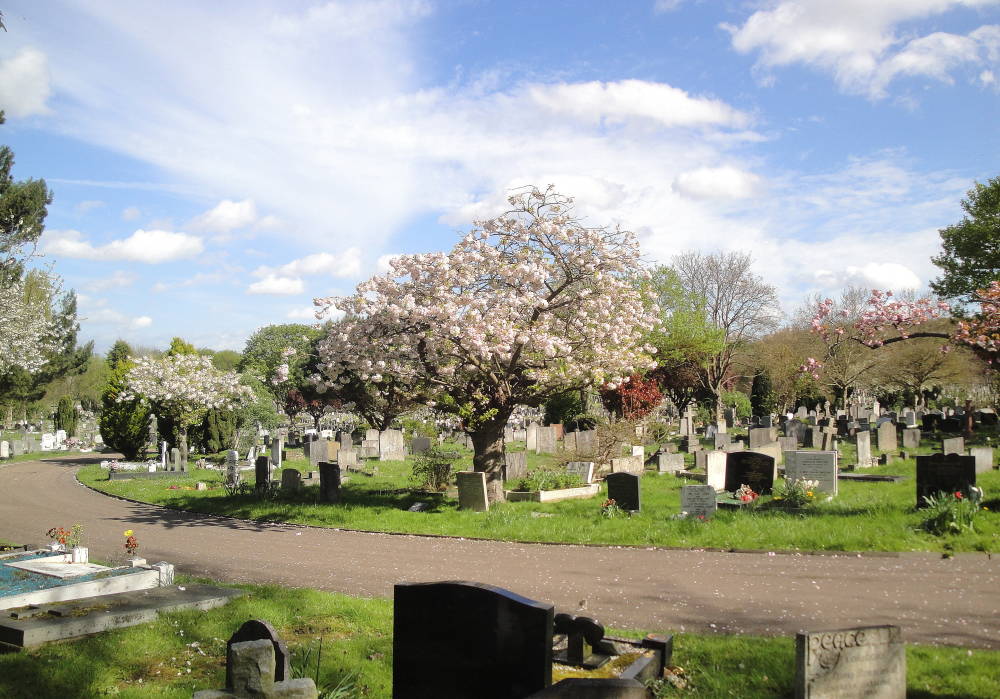
- Abney Park Cemetery, Stoke Newington, Greater London
- Brockley Cemetery, with Ladywell
- Brompton
- Camberwell
- City of London
- Ealing
- Golders Green Crematorium
- Hammersmith New (Mortlake)
- Hampstead
- Harrow (Middlesex)
- Highgate
- Hillingdon (Middlesex)
- Hither Green
- Kensal Green
- Kingston on Thames
- Margravine (Hammersmith)
- Nunhead
- Paddington
- Putney Vale
- Twickenham Cemetery
- Willesden United Synagogue Cemetery
London Cemeteries for which no materials are yet online
- Hoop Lane (Jewish)
- Putney Lower Common
- St. Mary's (Roman Catholic)
Parks outside the Greater London area
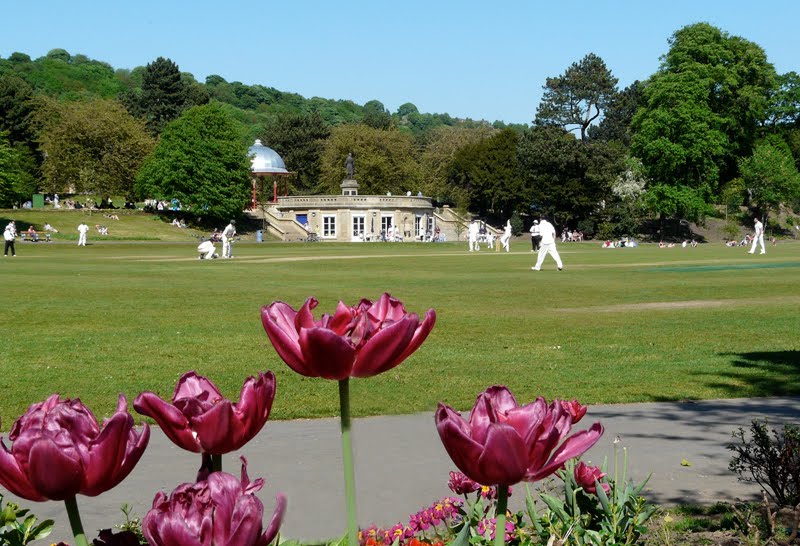
- Birkenhead Park, Wirral, Merseyside (the first publicly-funded public park)
- Ellington Park, Ramsgate (a review)
- Guildford Castle Grounds, Guildford, Surrey
- Roath Park, Cardiff
- Roberts Park, Saltaire, near Bradford, Yorkshire
- Saltwell Park, Gateshead
- Sandown Park, Esher, Surrey (race course and golf club)
- St John's Gardens, Liverpool
Cemeteries and Crematoria outside the Greater London area
- Beckenham Cemetery, London Road, Bromley, Kent
- Brookwood Cemetery, Surrey
- Compton Cemetery, Surrey
- Coventry Cemetery
- The Cremation Society and Woking Crematorium, Surrey
- The Glasgow Necropolis
- The Howff, Meadowside, Dundee, Scotland
Cemetries Abroad
- The English Cemetery in Florence
- Florence’s English Cemetery, 1827–1877: Thunders of White Silence by Julia Bolton Holloway (review by Jeffrey Begeal)
Gardens and gardening
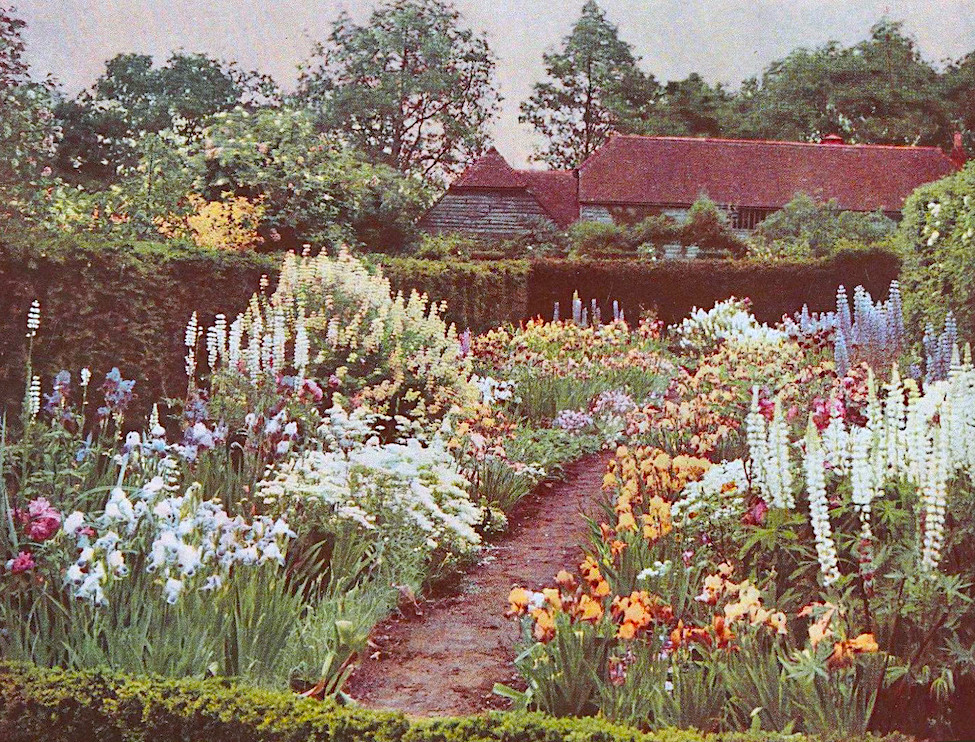
One of the greatest social changes of the 19th century was a massive exodus from the countryside, with the nation developing an industrial rather than an agricultural base. As the economy improved, the population rose steadily, providing a cheap and plentiful labour force. The working class gradually abandoned the farms and fields to work in mills and factories, while the middle classes joined professions like banking and insurance. Home ownership became increasingly common among this class who grasped the opportunity to develop fashionable gardens around their new houses and villas. — Anne Jennings, p. 3
- Gertrude Jekyll, 1843-1932 — Pioneer Garden Designer
- The English Influence on American Gardens
- William Robinson, 1838-1935 — Horticulturist and Advocate of the "Wild Garden"
Bibliography
Conway, Hazel. Public Parks. Shire Garden History series. Princes Risborough, Bucks.: Shire, 1996.
Curl, James Stevens Curl. Victorian Architecture. Newton Abbot: David & Charles, 1990.
Hart-Davies, Adam. What the Victorians Did For Us. London: Headline, 2001.
Jennings, Anne. Victorian Gardens. London: English Heritage, 2005.
Pearson, Lynn F. Discovering Famous Graves. Princes Risborough, Bucks.: Shire, 1998.
Created 14 August 2014
Last modified 29 April 2026