

andolph Caldecott’s books for the very young were among the most popular juveniles of the late 1870s and 80s. Working in conjunction with the engraver Edmund Evans, who reproduced his designs using coloured wood blocks, Caldecott’s illustrations are a close match with the nursery rhymes. His images are accomplished pieces of visual storytelling, combining his gift for humorous narrative with a strong grasp of character, absurd events and social foibles. These qualities are expressed within a concrete worldview: the rhymes may be fantasies, but Caldecott embodies them in closely observed, everyday detail.
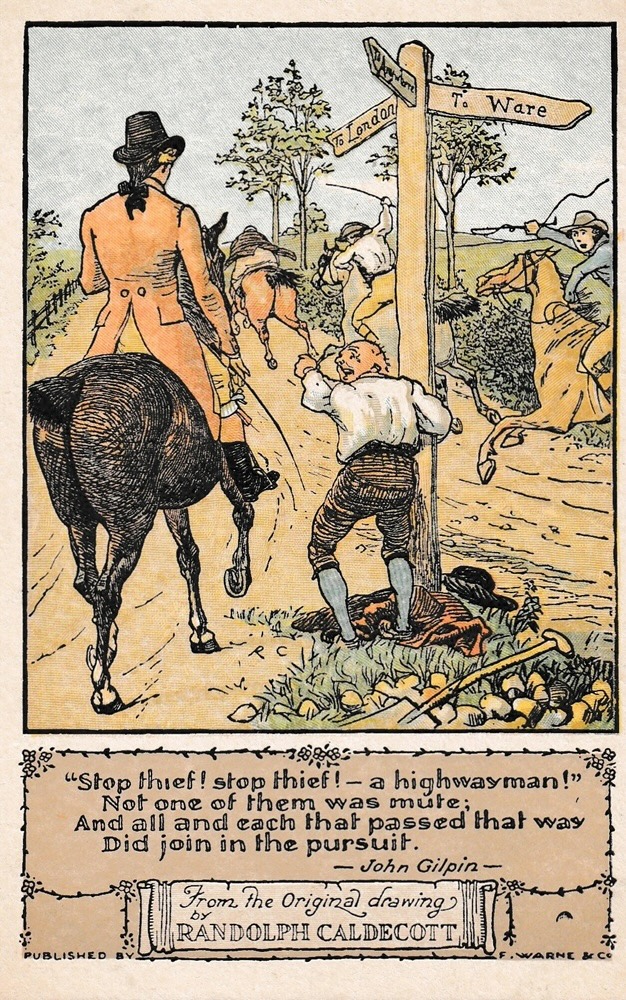
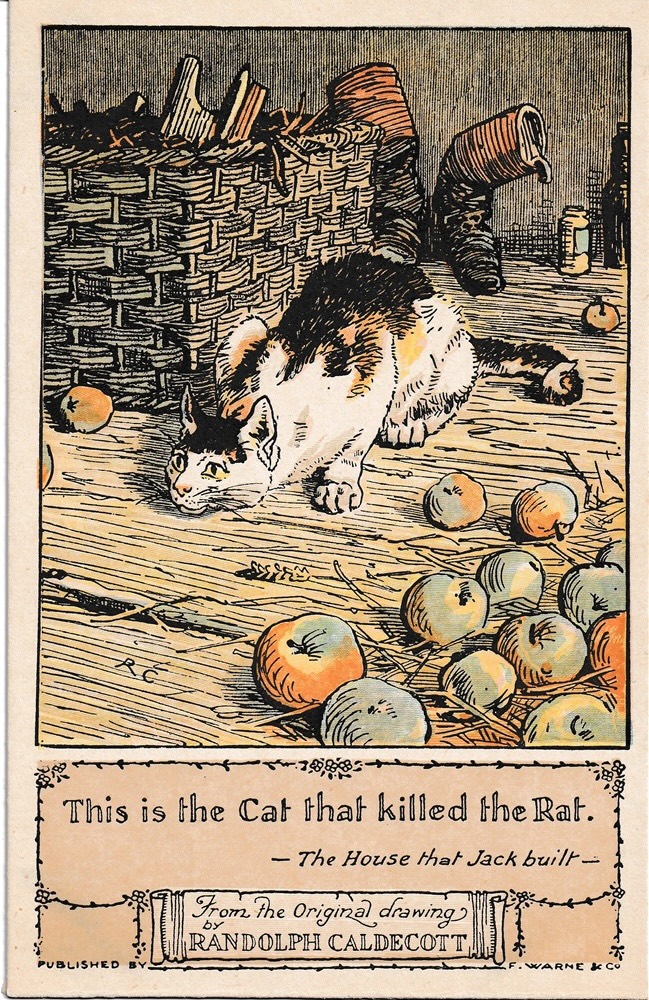
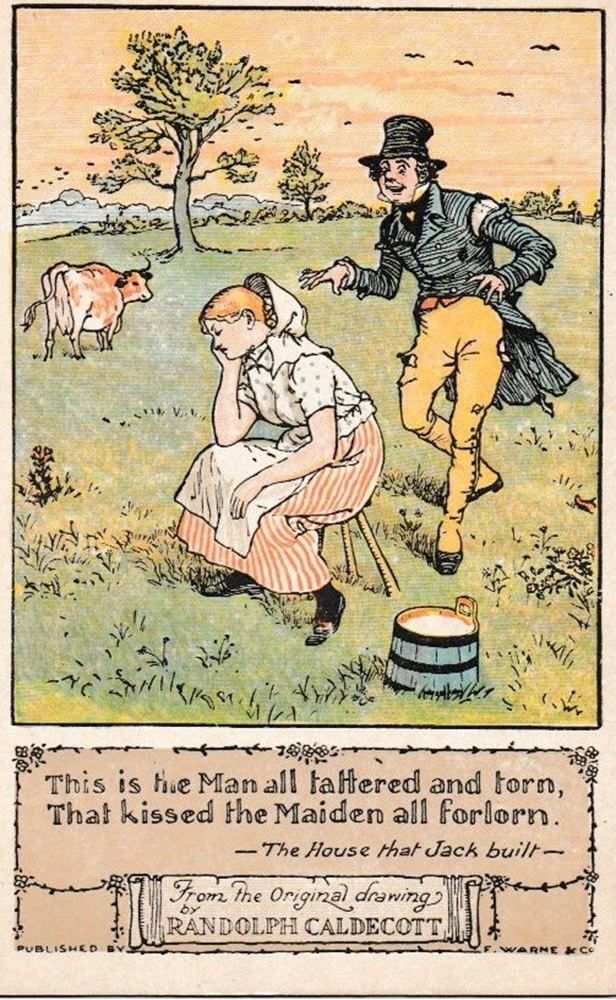
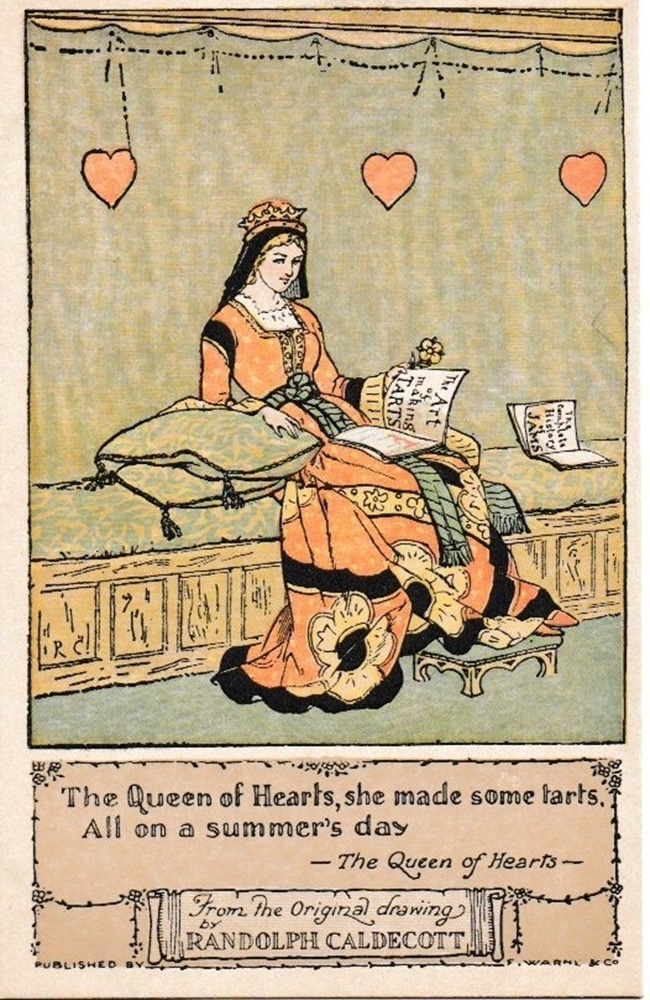
From left to right: (a) "Stop thief! stop thief!" (b) This is the Cat that killed the Rat. (c) This is the Man, all tattered and torn. (d) The Queen of Hearts.
His imaginative vision is very much in the tradition of neo-Regency image-making: like Kate Greenaway, Hugh Thomson and Chris Hammond, Caldecott worked in the escapist vein, the casting back to a pre-industrial, rural age, that was popular at the end of the nineteenth century. His books were endlessly reprinted to meet the needs of his audience – and the financial demands of his publishers – and after his premature death in 1886 at the age of just 39 his imprints continued to appear, delighting generations of children well into the twentieth and twenty-first centuries.
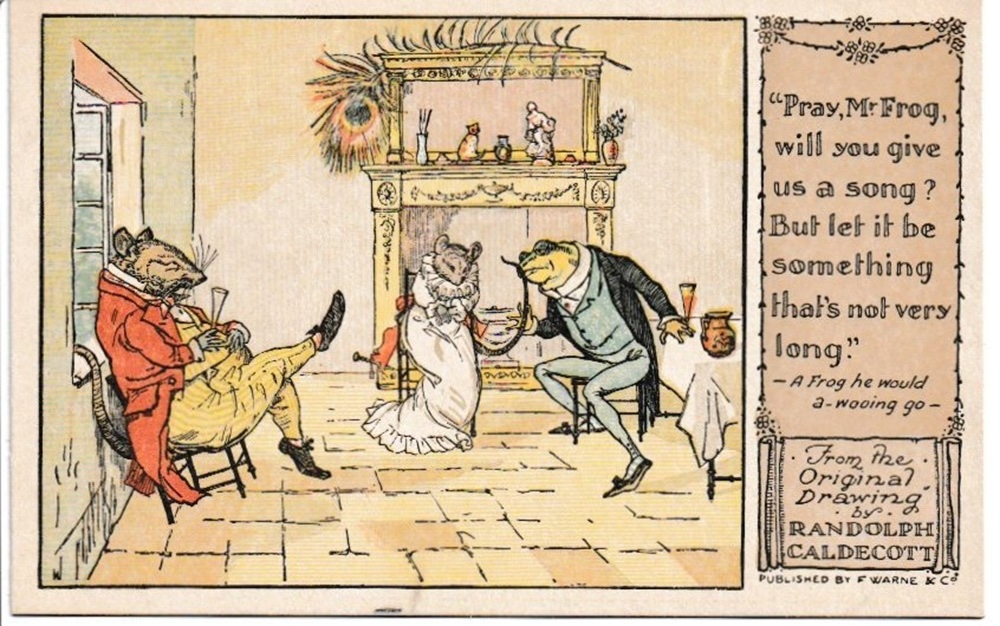
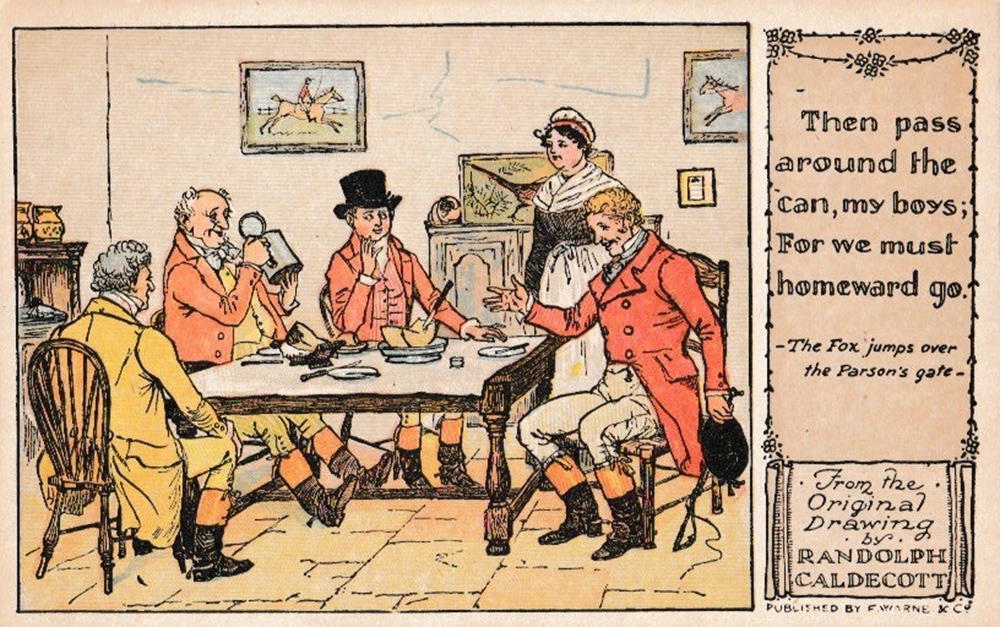
Left: "Pray, Mr Frog, will you give us a song?" Right: Then pass around the can, my boys.
It was also believed that Caldecott appealed to adults, and in 1916 forty-eight of his designs were lifted from his books and reprinted as postcards. The timing is significant. As Britain struggled with the disaster of the Great War, Caldecott’s good-humoured vision of an older Englishness, an England of swains and gentlefolk, was an appealing alternative to a harsh reality. Indeed, Caldecott’s generous imagery seemed to embody the national myth of ‘Good Old England’ and acted as ‘soft propaganda,’ offering a small comfort in a truly terrible period in the nation’s history. Though not as well produced as Evans’s original prints – there being a noticeable paling of the colours and a slight loss of definition – these postcards are still a pleasing reminder of the artist’s delightful work. They were re-issued in 1974, an indication of Caldecott’s lasting appeal.
Related Material
- Victorian Art Postcards (includes one of Caldecott's)
- Victorian and Edwardian postcards of places
Created 13 June 2026