

Ellen Henrietta Ranyard (1810–1879), widely known by her pen name L.N.R., was an English writer, a pioneering missionary and social innovator who founded the London Bible and Domestic Female Mission (later known as the Ranyard Mission). She is best known for developing two innovative forms of social support: the Bible women and the Bible nurses, effectively creating the first paid social workers and district nurses in London.
A brief biographical note
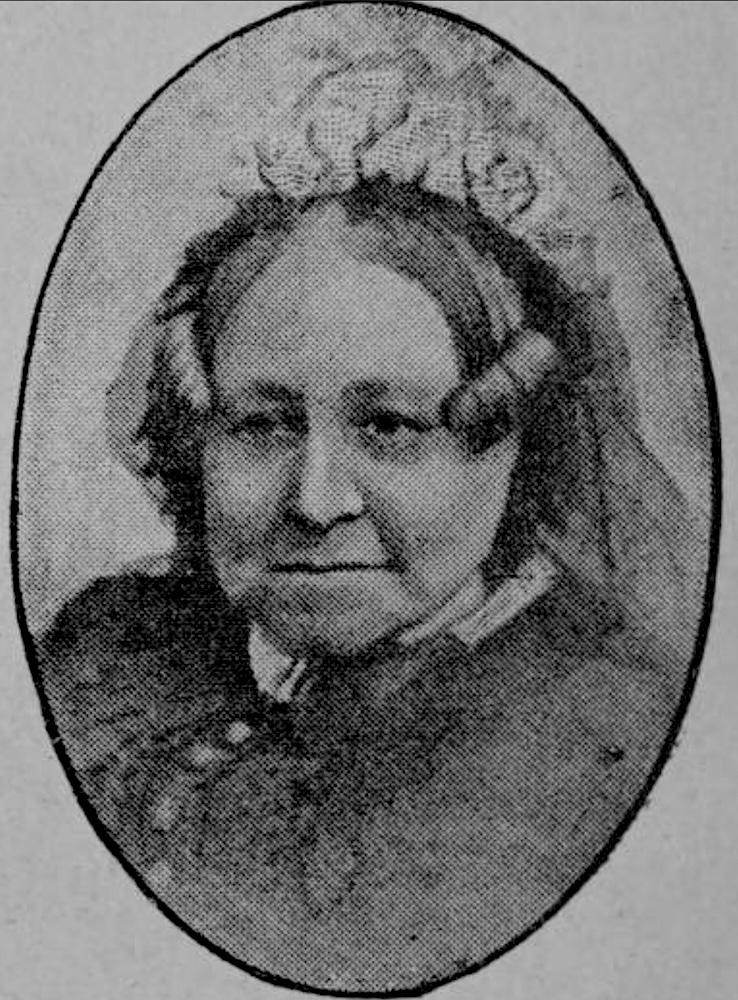
Ellen Henrietta Lanyard. Source: Alldridge, frontispiece.
Born to a nonconformist family in the poor south London waterside district of Nine Elms, Ellen Henrietta Ranyard, née White, was the daughter of an apparently prosperous cement manufacturer John Bazley White and Henrietta White (formerly Clark). Ellen attended the Congregational church in Walworth and reports about her mission history began when, at 16, she and her parents attended a general Bible meeting at Wanstead (an area of East London). There she befriended Elizabeth Saunders, a young woman devoted to evangelical ministry. While visiting the sick poor with Elizabeth, both girls contracted typhoid fever. Her friend died, but Ellen survived and dedicated her life to missionary work, famously stating that “the Bible work was the one work to which I had been called by God” (“A Well Lost Life," 68).
In 1839, Ellen married Benjamin Ranyard, a London merchant and fellow nonconformist. The couple first lived in Swanscombe, a town in Kent. Thanks to her husband’s financial and emotional backing, Ellen could focus on her early literary writing and Bible study. Over the next years, she gave birth to four children who survived infancy. In 1857, the couple moved back to London to establish the London Bible and Domestic Female Mission (also known as the Bible women mission) in Seven Dials, one of London’s most deprived areas. The primary objective of the Mission was to spread the Christian message among the poor, particularly women, in the slums of urban England, by selling and reading Bibles. A number of pious working-class women from various Protestant denominations were recruited and paid modest salaries to sell affordable Bibles on weekly instalment plans and teach poor women basic domestic skills, such as cooking, cleanliness and sewing. They became the first paid social workers in Britain. The Bible women reported to the middle-class lady district superintendents who were often the wives of clergymen. These women wrote in the monthly newspapers stories of suffering, courage, and conversion reported by the Bible women.
In 1859, Ranyard published her most influential book, The Missing Link; or, Bible-Women in the Homes of the London Poor, which described how her mission provided Bibles and social aid to the poor. In the years 1865–1879, she edited a periodical, The Missing Link Magazine, originally titled The Book and Its Missions, which focused on social reform and missionary work.
In 1868, Ranyard expanded her organization by creating a corps of “Bible Nurses,” the first district nursing service in London. These Bible nurses underwent three months of general training followed by three to six months of hospital or field probation under a “lady superintendent” before they could offer service and help to the sick and needy poor in their homes. The name of the organization was accordingly modified to the “London Bible Women and Nurses Mission.” By 1867, her Mission employed 234 paid workers in London’s most deprived areas, such as Covent Garden and Seven Dials (Smith).
The remarkable scope and reach of their activities would increase, so that the biographer Lizzie Allridge could write later:
In the year 1884 the Bible-women sold nearly twelve thousand Bibles or parts of Bibles, and all were paid for in pennies. Find the value one single text may be to one single soul, multiply by all the texts in the Bible, then multiply the Bible by twelve thousand, add to this the personal influence of an earnest Christian woman, and when you have finished this sum you may be able to arrive at some faint idea of the value of the Bible-women’s work. [100-01]
In the 1870s, Ranyard’s health began to decline due to chronic overwork, culminating in repeated attacks of bronchitis that confined her increasingly to her home. Ellen Ranyard died of bronchitis at her home in Hunter Street, London, on 11 February 1879, at the age of 69. Almost a month later, her husband Benjamin died too. Both were buried in West Norwood Cemetery.
Of her portrait, shown above, Lizzie Alldridge writes,
The portrait was taken late in Mrs. Ranyard’s life, but it is exceedingly characteristic, She was extremely kind and extremely firm. You see both qualities in the keen, deep-set eyes, that seem to judge and weigh and penetrate, but never pierce; in the shrewd, almost humorous expression of the mouth; in the pleasant smile. How beloved that face was in life, and how tenderly regretted now! Those who worked with her can scarcely yet say calmly, “I can’t tell you what she was like, but I have her in my heart! Oh, she was kind — kind — kind! She was unique, there was never any one like her!”
These are the sort of answers, spoken with tears welling up in the eyes, that tell more than words - how much she is missed, when one tries to find out what manner of woman Mrs. Ranyard was. [101-02]
A pioneer of social work and district nursing
Ellen Ranyard’s mission work was revolutionary for its time, particularly for how it bridged the social divide between the wealthy and the urban poor. Known as the “Missing Link” (which was also the name of her mission’s magazine), her strategy focused on empowering working-class women to serve as the primary agents of change within their own neighbourhoods. Ranyard argued that middle-class charitable visitors were often too culturally distant from the urban poor to be effective. Therefore, she recruited working-class women from within the neighbourhoods and they served to act as a bridge (the “link”) between the upper classes and the poorest families. Ranyard established the first organized district nursing programme in London which combined evangelism with social welfare.
A good deal of preliminary trial-and-error was involved, as Ranyard herself explained, when looking back:
Of course these first seven years have been experimental; we saw the want, but had to ascertain the welcome. We had to test the physical as well as the mental powers of the Nurse, as well as the fruits of her four months' training; how many cases she could ordinarily visit in a day, and the kind and quantity of supplies which she would find it needful to administer; how far, also, she could be brought into useful relation to the medical men of the district, whether hospital, dispensary, or parish doctors.
We had also to find how far the new offshoot would take from the strength or add to the value of the original root, the Mission of the Biblewomen, whether our superintending ladies would look kindly upon it, and what separate help would arise for it in donations, or by personal effort of Lady-Superintendents of its own; also, whether ladies would train themselves to superintend a trained nurse, and provide and chronicle her supplies for the patients. Finally, and this was a very important point, how far the Biblewomen would work together with their new sisters, endowed with some powers of relief, which to themselves had been generally denied, lest the Bible Mission should cease to be eminently one of self-help, but which many of them were very apt to wish for, amid the mass of misery which confronts them in their daily labours. [Nurses for the Needy, 37-38]
Yet despite the many challenges, great progress was made.
Ranyard’s Bible women became a specific group of working-class missionaries who entered slums to distribute Bibles, provide basic religious education, and offer practical domestic guidance. The Bible woman model became a blueprint for Protestant missions worldwide, spreading from London to places as far away as India, China, Japan and Korea, to reach women in segregated or underserved communities. In India, Bible women, attached to many Protestant missions, served poor local women as grassroots evangelists, teachers, and health workers. As foreign male missionaries were often barred from entering the private quarters of Indian homes, Bible women gained exclusive access to reach women across all social strata. Starting in the late 1860s Bible women also played a significant role in the growth of the Chinese Protestant Church. They led the charge against social injustices such as human trafficking, child marriage, the practices of foot-binding and female infanticide. In Japan, during the Meiji era, indigenous Christian women worked as Bible women in both urban and rural areas and they played a crucial role in expanding the reach of Christianity throughout the nation. They organized Sunday schools, prayer meetings, and Bible studies. They were also instrumental in bridging the cultural gap between Western missionaries and the local population. In Korea, native Bible women contributed to overcoming the strict gender segregation of the Confucian-influenced Joseon society. Their Bible classes served as foundations for female participation in social and political actions, such as the Korean New Woman movement and independence movement against Japanese colonial rule.
Conclusion
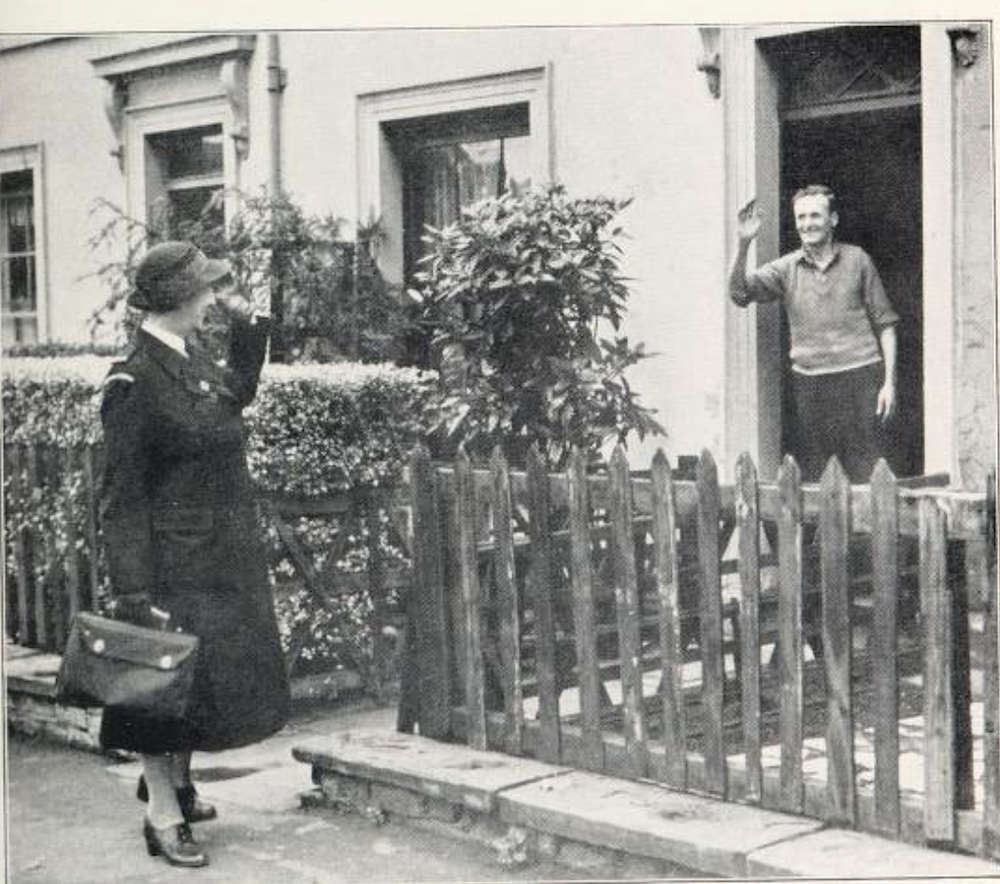
Ranyard Mission, frontispiece.
Ellen Ranyard is now regarded as a pioneering figure in female-led social reform. She was the central figure who inspired and founded the Bible Women and Bible Nurses movements, a significant part of Victorian philanthropy, social work and religious activity. At the time of Ranyard’s death, her Mission employed hundreds of women and had served thousands of most vulnerable citizens in London and in many other places in Britain.
The model was so successful that it was soon exported overseas. The Bible woman project was adopted by the British and Foreign Bible Society and spread across Europe, India, China, Japan and Korea to employ local women for distribution of scriptures and provision of practical home-management skills to other women in their communities. Ellen Ranyard’s scheme is still studied by historians as the groundwork for modern social work and a bridge between traditional religious charity and modern professional social services.
Related Material
- Slums and Slumming in Late-Victorian london
- The history of Seven Dials, a London slum
- The Seven Dials, by George Cruikshank
- After Crimea: Florence Nightingale and Slum Clearance
Bibliography
Alldridge, Lizzie. Florence Nightingale, Frances Ridley Havergal, Catherine Marsh, Mrs. Ranyard ("L.N.R."). London: Cassell, 1885. Internet Archive, from a copy in Princeton Theological Seminary. Web. 30 April 2026.
Anderson, Olive. “Women Preachers in Mid-Victorian Britain: Some Reflexions on Feminism, Popular Religion and Social Change.” The Historical Journal vol. 12, no. 3, 1969: 467–84.
Denny, Elaine. “The second missing link: Bible nursing in 19th century London.” Journal of Advanced Nursing, 26(6), Dec. 1997: 1175–82.
Ellis, James W. “Eastern Daughters in Western Missions: Bible Women and the Seeds of the Chinese Protestant Church.” Asia Journal of Theology vol. 33(1), 2019: 65–93.
Heeney, Brian. The Women's Movement in the Church of England, 1850–1930. Oxford: Clarendon Press, 1988.
Maxton, Esther. “The Contributions of British Female Missionaries and Japanese Bible Women to the Ministry of the Japan Evangelistic Band in the Early 20th Century.” Transformation: An International Journal of Holistic Mission Studies vol. 35(2), 2018.
“Mrs Ranyard: The Founder of the Bible Women's Mission." The British Messenger. No. 5. (May 1879): 61-63.Google Books. Free to read. Web. 30 April 2026.
Platt, Elsbeth. The Story of the Ranyard Mission 1857–1937. London: Hodder and Stoughton, 1937.
Prochaska, Frank, The Voluntary Impulse. Philanthropy in Modern Britain. London: Faber and Faber, 1988.
Ranyard, Ellen. The Missing Link; Or Bible-Women in the Homes of the London Poor. London: James Nisbet & Co., 1859. Google Books (free to read)
_____. Nurses for the Needy or Bible-Women Nurses in The Homes of the London Poor. London: James Nisbet & Co, 1875. Internet Archive, from the collections of Oxford University. Web. 30 April 2026.
Ranyard Mission. The Ranyard Nurses (founded 1868): nursing branch of the Ranyard Mission. Internet Archive, from the collections of the Wellcome Library. Web. 30 April 2026.
Ross, Ellen, ed. Slum Travelers: Ladies and London Poverty, 1860–1920. University of California Press, 2007.
Smith, M.K. “Ellen Ranyard (LNR), Bible women, district nurses and informal education.” infed org, 2025. Web. 30 April 2026. https://infed.org/dir/welcome/ellen-ranyard-lnr-bible-women-and-informal-education/
Stanton, Elizabeth Cady. The Woman’s Bible. New York: European Publishing Company, 1895.
"A Well Lost Life." The British Messenger. No. 5. (May 1879): 67-68.Google Books. Free to read. Web. 30 April 2026.
29 April 2026