
Described in the British Museum's catalogue as "Draughtsman on wood, mezzotint engraver, etcher, genre and landscape painter," Francis Sylvester Walker was born in County Meath in Ireland, but moved to London to study art when he was still twenty, and spent most of his adult life there. "Like many of his contemporary artists he first earned his living as an illustrator before exhibiting his work at the Royal Academy and later concentrating on mezzotinting and and etching his own paintings" (Paggett 8). For some time he worked as a wood-engraver for the Dalziel Brothers.
Walker was elected a member of the Royal Society of Painter-Etchers in 1897, when it was sharing the Pall Mall East premises of the Royal Society of Watercolours — a very appropriate pairing, not only for Walker himself, but more generally. As Michael Blaker has said, "an etching or engraving invariably commences with a drawing — or a finished watercolour may well provide the basis of a plate or block. There are innumerable combinations of approach, but every printmaker's folder has a good section of drawings and watercolours from his or her hand" (37). Interestingly, in the following year the society incorporated the word "Engravers" in its title.
Walker's daughters gave a collection of his work to the British Museum in 1919, a few years after his death. — Jacqueline Banerjee
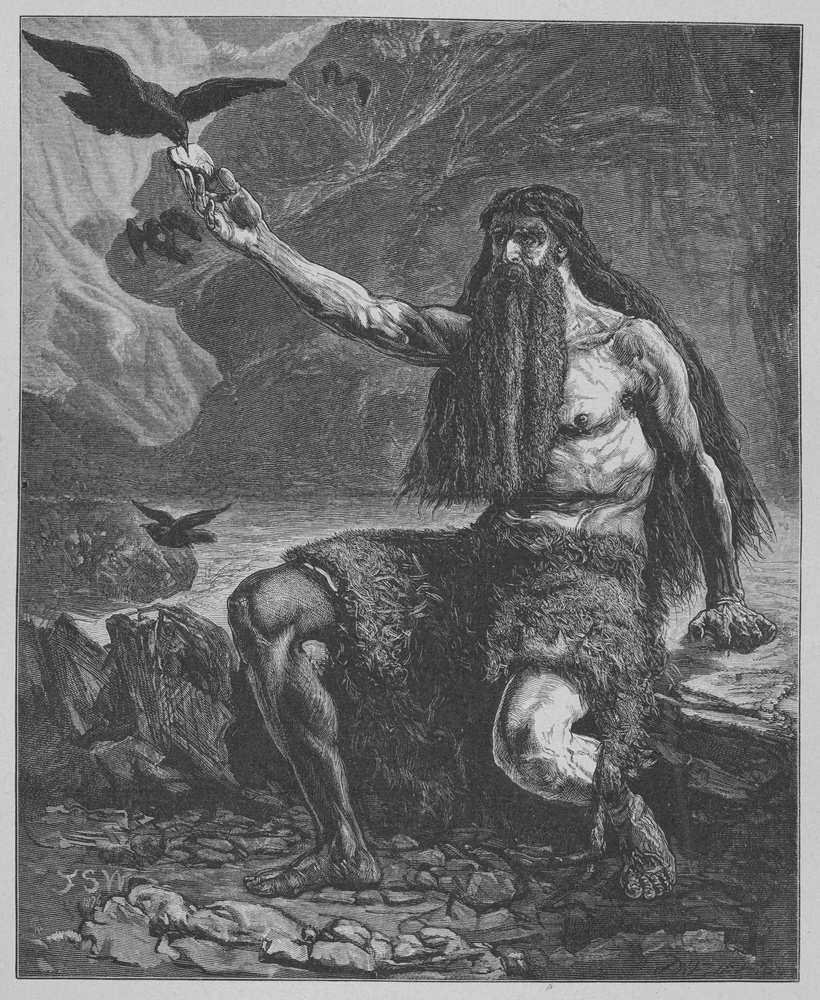
Illustration for Dalziels' Bible Gallery, 1880
Bibliography
Blaker, Michael. "Selections from The Editorial Collection Part I." The Journal of the Royal Society of Painter-Etchers & Engravers. No. 8 (1986): 31-39.
Dalziels’ Bible Gallery. London: Routledge, 1881 [1880].
"Francis S. Walker." The British Museum. Web. 1 August 2026.
Paggett, Andrew. Introduction. Ireland: The Emerald Isle, illustrated by Francis Sylvester Walker. London: Brockhampton, 1999. 8.
"Royal Society of Painter-Printmakers." Artist Biographies: British and Irish Artists of the 20th Century.Web. 1 August 2026.
Created 1 August 2026