

s a teenager living a very intense intellectual life, Vernon Lee was often involved in her older half-brother, the poet Eugene Lee-Hamilton's friendships and cultural interests. Eugene had met Giovanni Ruffini (1807-1881), the librettist of Donizetti's opera Don Pasquale (1843) and famous author of the novel Doctor Antonio (1845), in Rome in 1869, and they had started a friendly correspondence. Then, in Paris in 1870, Violet often visited the Italian with her mother.
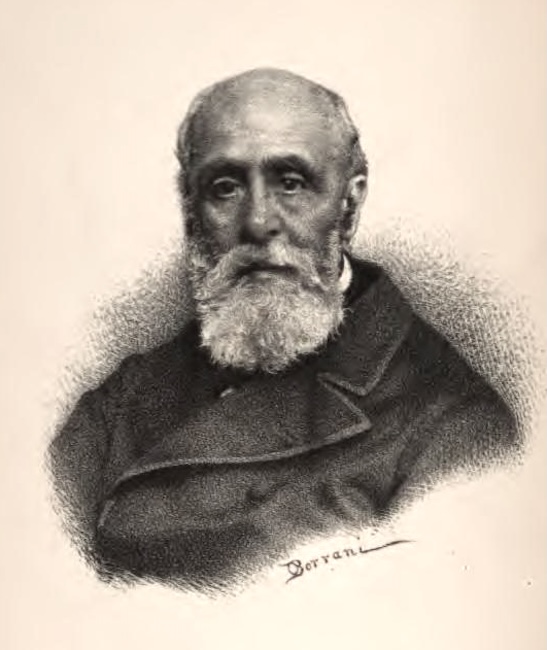
Giovanni Ruffini, frontispiece to Linekar.
In a letter dated 17 June 1870 and addressed to her father, she refers the contents of one of her conversations with Ruffini: “We talked about Rome, Paris, Mrs. Jenkin, books, statues and Mr. Story, the sculptor, and his well-known book Roba di Roma... the Ruffinis don't know him personally, but they highly recommend his book" (Cooper Willis). Both Violet and Eugene appreciated this friendship because Giovanni Ruffini, along with his brothers Jacopo and Agostino, was one of the first followers of Giuseppe Mazzini during the Risorgimento, the struggle for the liberation of Italy from the Austrian invader. Giovanni, in particular, fled into exile with the Republican leader, first to France then to England where he settled down in 1836 and started writing in English.
Perhaps Violet, perceptive as she was, had understood that in Giovanni Ruffini she had found a kindred spirit, endowed with a literary as well as a political sensitivity. When Violet's first story, "Les aventures d'une piece de monnaie," appeared in the Swiss magazine La Famille in 1870, Giovanni Ruffini immediately sent his congratulations. Their correspondence flourished after 1873. In that year, Eugene fell prey to severe hypocondria and stopped writing his highly appreciated sonnets. Giovanni Ruffini encouraged Violet in her studies on the eighteenth century. Their mutual friend, Mrs. Turner who died on 25 October 1874, bequeathed to Violet a watch which had belonged to Dr. Burney, and Ruffini interpreted this gesture as a sure sign of success for her enterprise. In 1875, a disconsolate Violet wrote to her mentor, then living in Taggia (Genoa) on the Italian Riviera, because Blackwood's Magazine had refused her article and the Italian editors accepted her work, but offered no payment for it.
Fortunately, the editor Angelo De Gubernatis enlisted her help for the publication of a few portraits of English men of letters and remunerated her efforts. Till 1879, the year in which their correspondence ended, Violet sought Ruffini's advice. He even corrected her Italian articles. She was grateful, but as was typical of her youthful enthusiasm, she was always full of requests: for instance, she wanted the good, elderly man to see if concerts of eighteenth-century music could be organized in the Riviera, if he could collect stories about the local folklore, if he could speak against vivisection or possibly have the Italian parliament pass a bill against such a barbaric and crude practice. Ruffini was baffled: he was going through a difficult period and, as a gentleman-farmer his life, he tells her “is hard, for his hens lay away from home, his rabbits die, and his grapes do not flourish (Corrigan 230).
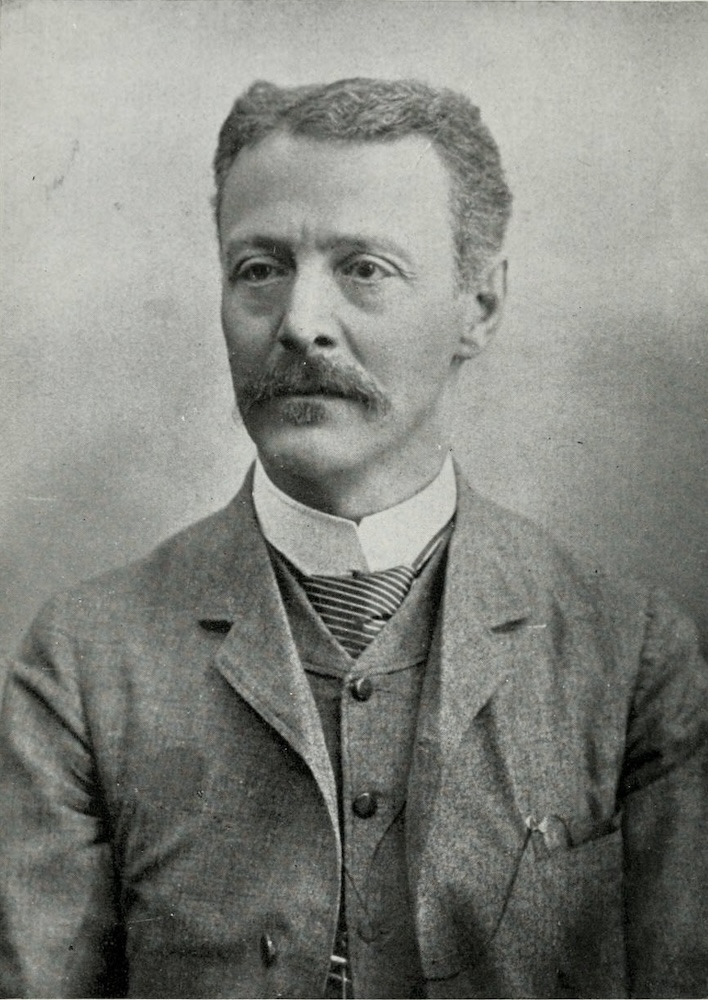
Enrico Nencioni, frontispiece to Saggi Critici di Lettertura.
In the 1880s Vernon Lee's Italian circle widened to include some of the best known writers of the day. At the beginning of the decade, through the Florentine painter Telemaco Signorini, she met the critic and poet Enrico Nencioni (1837-1896), particularly admired for his pioneering work in comparative literature (French and English) by the contemporary poets Giosue Carducci and Gabriele D'Annunzio. Nencioni was then a collaborator of some of Italy's most distinguished magazines: Fanfulla della Domenica the cultural supplement of the leftist daily Fanfulla, directed by Ferdinando Martini; “Nuova Antologia”, an international journal, the Italian equivalent of the French Revue des deux mondes; and the Cronaca Bizantina, directed by Angelo Sommaruga and illustrated by Tranquillo Cremona. Nencioni is undoubtedly best remembered for his positive influence on the young Gabriele D'Annunzio whose taste for French and English romantic and decadent authors he helped to form and develop.
In Althea, Vernon Lee modelled the character of the professor on Enrico Nencioni: "with his thin Tuscan face, in which, as in his gentle and fiery soul, his friends are apt to trace a likeness to St. Francis." In the same book she dwells on "the passionate pity for the animals tortured by science"(208 and 214), one of Lee's pet topics, which coincided with Nencioni's own plea against cruelty to animals. Their friendship, though, had also a practical side. It was Nencioni who reviewed, from 1880 to 1887, five of Lee's works (Studies of the Eighteenth Century in Italy, Belcaro, Euphorion, Baldwin and Juvenilia). It was Nencioni who introduced the English writer to D'Annunzio around 1885, when the decadent poet and novelist was the editor of the Cronaca Bizantina. It was also through the mediation of the Italian poet that Lee contributed to many important journals of the period: Domenica del Fracassa; Fanfulla della Domenica; Cronaca Bizantina; and Nuova Antologia. On the other hand, Vernon Lee, like nobody else in Florence, could discuss and explain the poetry of Shelley, Browning, Tennyson, Swinburne, and Poe. In Nencioni's memories, Impressioni e rimembranze (1923), these names and interests recur over and over again. Nencioni and Lee did not always meet eye to eye. In a letter which the Italian addressed to a mutual friend, Carlo Placci, he complained that in Baldwin, Lee had replaced the belief in God with the idea of the evolution of the species. He calls her a "perverted Violet" and hopes that God will enlighten her (see Pantazzi 257).
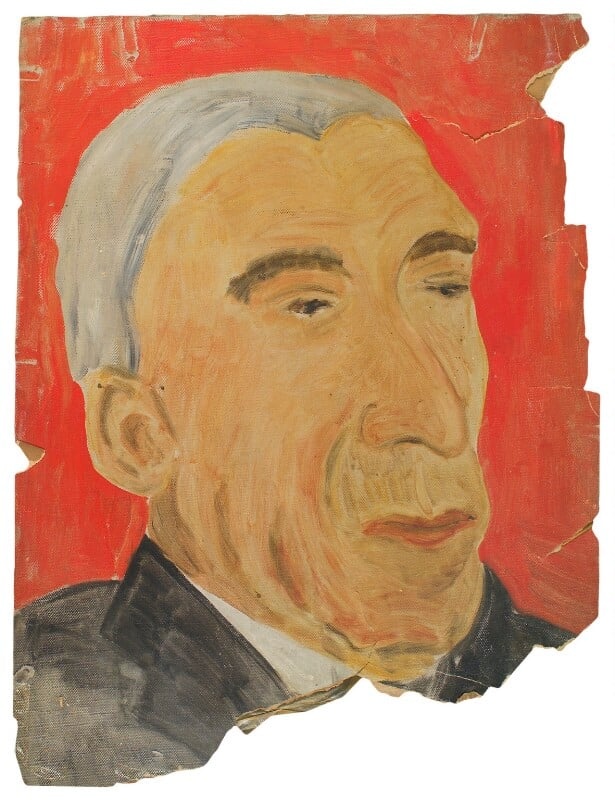
Carlo Placci, by Ray Strachey, © National Portrait Gallery, London (see bibliography).
Carlo Placci (1861-1941) was essentially a cosmopolitan man of letters and anglophile. In his "salon" in Florence in Via Alfieri 7, international celebrities were always welcomed. His contemporary, the writer Ugo Ojetti tells us that he was known by all those who are known ("conosciuto da tutti quelli che tutti conoscono") and the celebrated pianist Hans von Bulow nicknamed him the "cosmo-polisson" for his excellent manners, but also because wherever he went in Europe, he was invited at court. He wasn't only a brilliant talker with a fluent command of several European languages, he was also a good pianist who had made the acquaintance, at different stages of his life, of the most important musicians of his day: Puccini, Verdi, Cesar Franck, Vincent d'Indy. He had played with von Bulow, Kreisler and Joakim and he had accompanied on the piano Lina Cavalieri and Isadora Duncan at benefit performances. He had even acted with Eleonora Duse. In his autobiographical notes, In automobile (1908), as well as in his novel, Mondo mondano (1898), he describes the high-society of the time, that class which wintered in Cannes and Florence and included Henry James, Hugo von Hofmannsthal, Romain Rolland, Rainer Maria Rilke, Maeterlinck, Mark Twain, Bertrand Russell. He had known all the people that Proust had been familiar with and refashioned as characters for his Recherche. He was also a good friend of the French critic, admirer of Walter Pater, Charles Du Bos (Tosi) — who had realized, after his acquaintance with Vernon Lee, that it was in Florence and not in Oxford, that Pater's words could best be understood.
Placci's correspondence with Vernon Lee lasted from 1883 to 1926 and it can be consulted in the Biblioteca Marucelliana in Florence. Although there were moments of heated discussion, their friendship never wavered. When Lee had her feud with Bernard Berenson, Placci, who knew both well, avoided taking sides and thereby provoked her disapproval. At the outbreak of the war, their opinion again diverged: Lee was the dove and Placci the hawk. But no hard feelings survived. Lee dedicated Juvenilia to Carlo Placci and he also appears as "Carlo," one of the protagonists in the dialogues of Baldwin and Althea. For his part, Placci drew her literary portrait in his novel of 1892, Un furto (A Theft). He reviewed Euphorion and Miss Brown and wrote a rather good article when her half-brother Eugene died, remembering him as the last of the Anglo-Italian poets (L'ultimo dei poeti anglo-italiani), in Il Marzocco, 10 November 1907).
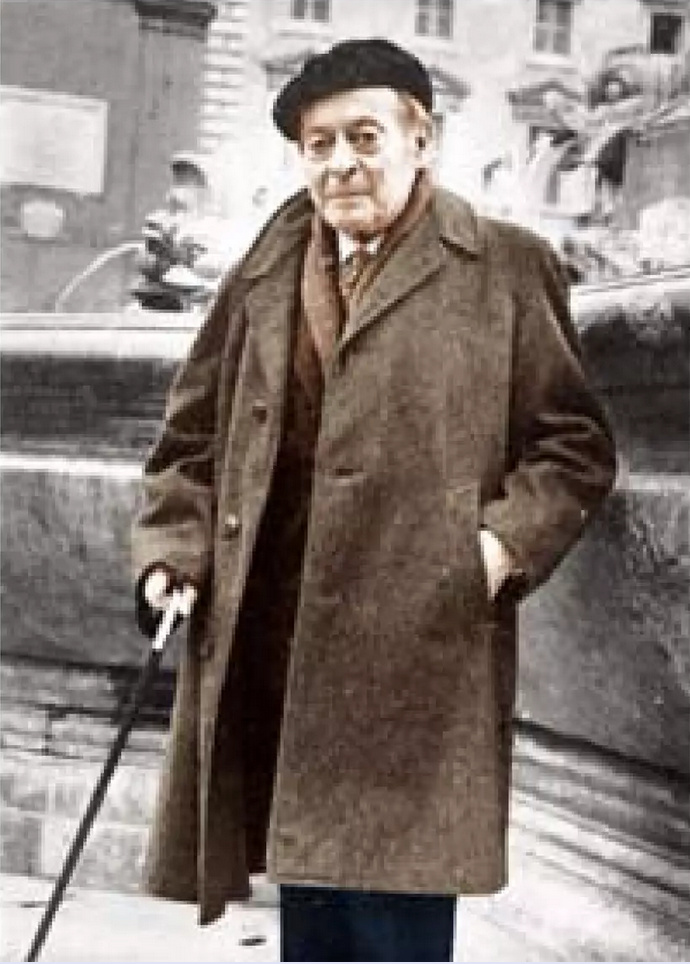
Mario Praz, via Slideshare (see bibliography).
For another Italian, who, according to Lee was to become a second Charles Du Bos, a visit to Il Palmerino became the introduction to a unique, new world of cultural relations. Mario Praz (1896-1982) recalls the eventful day (Il patto col serpente, 270-297) on which he climbed the hilly slopes to Maiano in 1920, sent by the playwright and poet Herbert Trench. There he met a very lively, mature lady wearing a grey suit and a very white blouse and tie highlighted by a cameo. Her face was not particularly sweet, but as she went on talking, she began to disclose enormous treasures of human kindness. Praz was awarded a scholarship to study in England and then in 1924 he obtained a post as Senior lecturer in Liverpool where he felt lonely and sad. He wrote to Vernon Lee and she replied on 28 January 1924 with a long letter in which she humoured the young scholar by telling him that, instead of dedicating his young life totally to literature, he should be full of curiosity, perhaps fall in love and later on marry (Praz, La casa della vita, 275-77). Mario Praz and Vernon Lee met for the last time at Maiano in 1933. The lady had aged, she had become deaf, and a bit hostile. But the grateful Praz had preserved his first, generous recollection of her, and, more important, he was still full of praise for her writings. Along with Aldous Huxley, one of her admirers, he commended her books on travels (rarely read today), her essays (many not in print any more or available only in good libraries), and her romance, or, as he calls it, her "fantasia drammatica," Vernon Lee’s only play, Ariadne in Mantua (1903) which, he declares, "is full of delicate grace" (Il patto col serpente, 292).
Bibliography
Cooper Willis, Irene, ed. Vernon Lee's Letters. London: Privately printed, 1937.
Corrigan, Beatrice. "Giovanni Ruffini's Letters to Vernon Lee, 1875–1879." English Miscellany vol. 13 (1962): 179-240.
Lee, Vernon. Althea: A Second Book of Dialogues on Aspirations. London: Osgood, McIlvanie &Co., 1894.
Linekar, Arturo. Giovanni Ruffini. Firenze: Fratelli Boca, 1882. Internet Archive, from a copy in Harvard College Library. Web. 5 June 2026.
Nencioni, Enrico. Saggi Critici di Lettertura (with a preface by Gabriele D'Annunzio). Firenze: Successori le Monnier, 1911. Internet Archive, from a copy in Robarts – University of Toronto. Web. 5 June 2026.
Pantazzi, Sybille. "Enrico Nencioni, William Wetmore Story and Vernon Lee." English Miscellany Vol. 10 (1959): 249-60.
Praz, Mario. Il patto col serpente. Milano: Mondadori, 1972. 270–297.
_____. La casa della vita. 2nd ed. Milano: Adelphi, 1986. 275-283.
_____ (photograph in). Presentation entitled "La Lezione delle rovine." Slideshare; reproduced under the terms of the Creative Commons Attribution 2.0 Generic CC BY 2.0 Deed. Web. 5 June 2026. https://www.slideshare.net/slideshow/la-lezione-delle-rovine-presentation/599671
Strachey, Ray. Carlo Placci, © National Portrait Gallery, London, NPG D219; reproduced under the terms of the Attribution-NonCommercial-NoDerivs 3.0 Unported CC BY-NC-ND 3.0 Deed.
Created 7 June 2026