

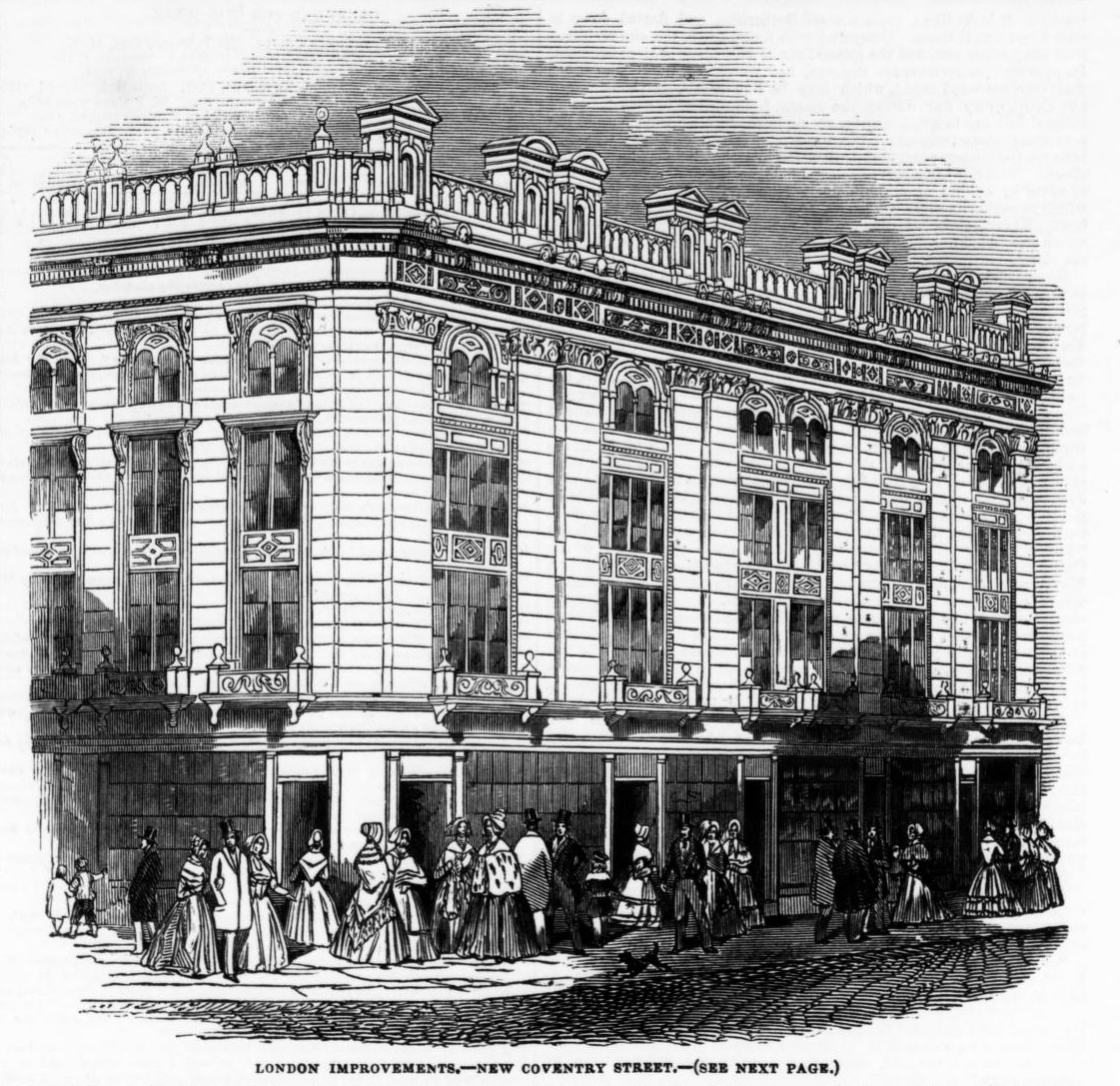
ames Pennethorne played a major part in the evolution of London into a modern metropolis. When John Nash made him his principal assistant in 1828, he embarked on a programme of road-route improvements which included Carlton House Terrace; the St. James’s Park area; New Oxford Street, which cut across the dreadful slums of St Giles Rookery (1843-7); Commercial Street, which, it was hoped, would allow dockland traffic to bypass the city area (1843-7); the approaches to Windsor Castle (1846-52); and Buckingham Gate (1853-8).
Allied to his street improvements were the laying out of several parks, including, in London: Kennington Park in South London (1841-51), Victoria Park in the East End (1842-45), and Battersea Park on the South Bank of the Thames (1858).
Bibliography
Allinson, Ken. Architects and Architecture of London: A Celebration of the Significant Architects Who Have Contributed to the Fabric of the Capital. Oxford: Architectural Press, 2008 (see p.122).
Halliday, Stephen. Making of the Metropolis: Creators of Victoria's London. Derby: Breedon, 2003.
Lewis, David. Walks Through History: Liverpool. Derby: Breedon, 2007.
"Sir James Pennethorne" (Obituary). The Builder Vol. 29 (16 September 1871: 717-18. Available on the Internet Archive.
Thornbury, Walter. Old and New London: A Narrative of Its History, Its People and Its Places. Vol. III: Westminster and the Western Suburbs. London, Paris & New York: Cassell, Petter, Galpin & Co. Available on Google Books Reader.
Turnor, Reginald. Nineteenth Century Architecture in Britain. London: Batsford, 1950.
Tyack, Geoffrey. "Sir James Pennethorne (1801-1871)." The Oxford Dictionary of National Biography. Online ed. Viewed 27 Nov. 2007.
Weinreb, Ben and Christopher Hibbert, eds. The London Encyclopaedia. London: Macmillan, rev. ed. 1992.
White, Jerry. London in the Nineteenth Century: "A Human Awful Wonder of God." London: Cape, 2007.
Created 25 September 2007
Last modified 5 November 2026