

ecause of the fire which destroyed its roof in April 2019, and thanks to the indispensable restoration work which followed, the interior of Notre-Dame-de-Paris can now be admired in its pristine whiteness, but the cathedral also boasts one of the most beautiful neo-Gothic decors in France. Between 1844 and 1868, Eugène Viollet-le-Duc and Jean-Baptiste Lassus radically transformed the decaying building: they "completed" it by adding features which are now considered to be part of the edifice, but which were the original products of their imagination, like the famous stone chimeras.
Inside the cathedral, the central chapel, dedicated to Our Lady of the Seven Sorrows, already included a late fourteenth-century fresco, and painter Auguste Perrodin (1834-1887), who had worked in Saint-Germain-des-Près under the supervision of Hippolyte Flandrin, resorted to a vaguely archaic type of composition. But the most visible intervention of Viollet-le-Duc and Lassus involved the side chapels. In 1864, as there was no public money left for the interior decor, private donations had been needed to finance the works. One century later, in the 1960s, the neo-Gothic wall frescoes were removed, as they were then considered dispensable — except, most fortunately, in the twenty-three chapels surrounding the choir, where the recent refurbishment now allows visitors to enjoy the bright colours of the medievalist decor. Glimpses of a few of these are shown below. [Click on all the images to enlarge them.]
Chapel of St. Louis
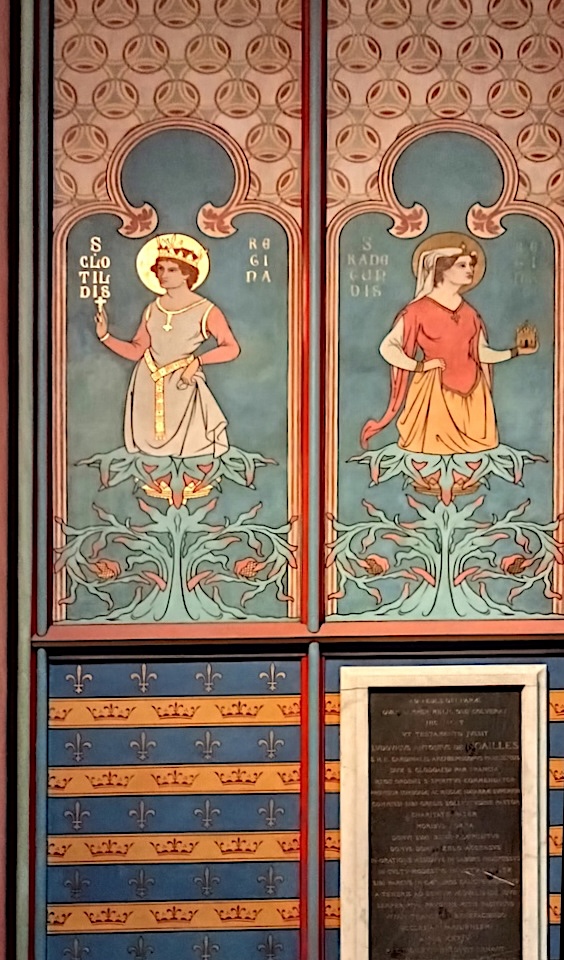
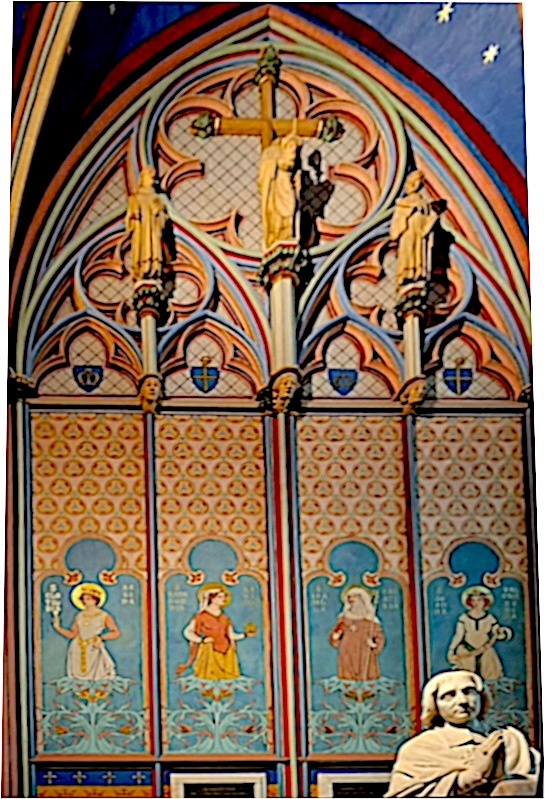
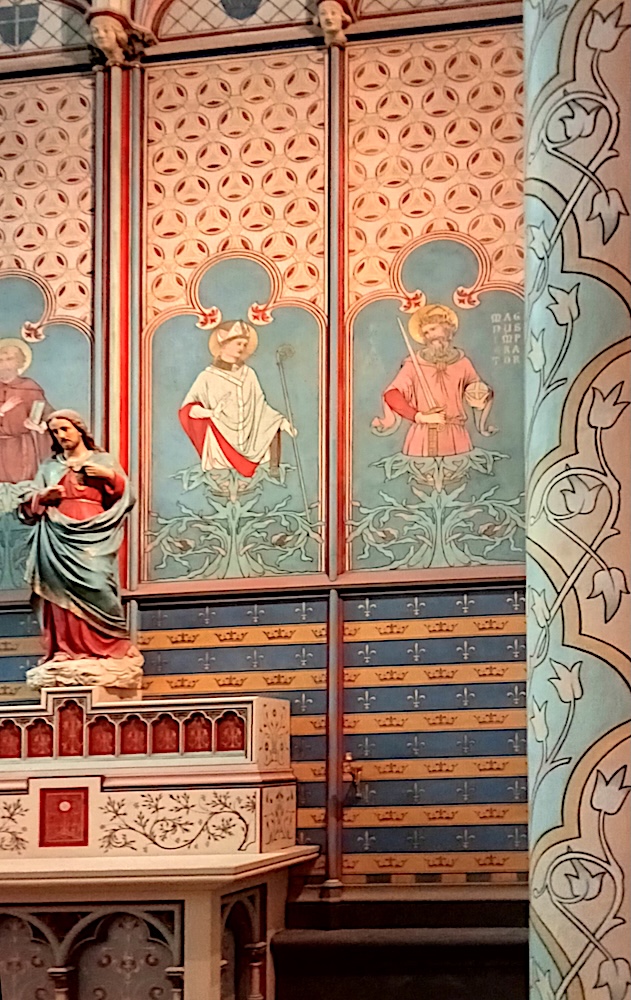
Above left one sees, in the wall painting in the apse chapel of St Louis, first, St Clotide and St Radegonde; in the middle, St. Clotilde and St. Radegonde together with two other female saints, St. Isabella and St. Jeanne de Valois; and on the right, Bishop St Louis of Anjou and Charlemagne on the opposite wall.
Chapel of St. Marcel
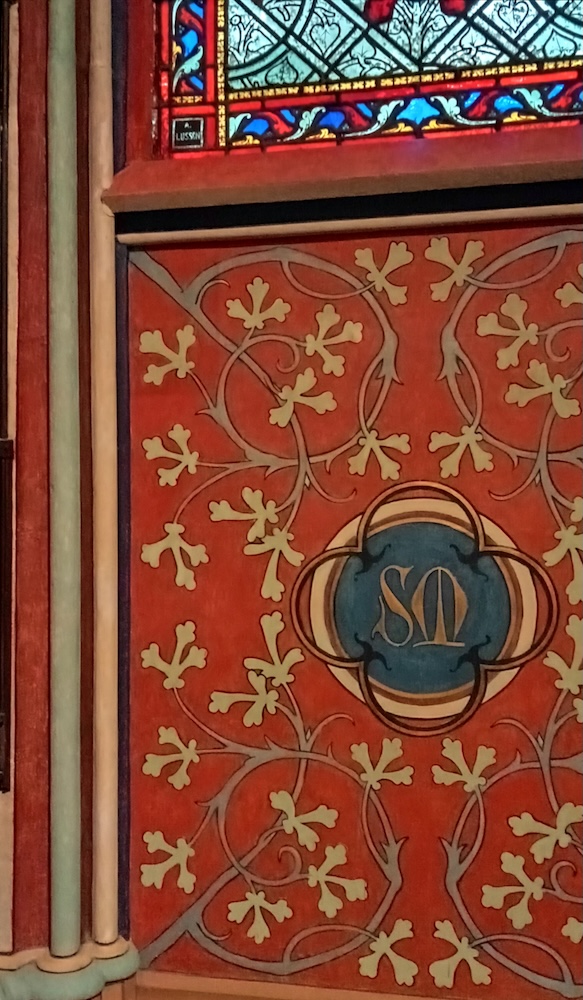
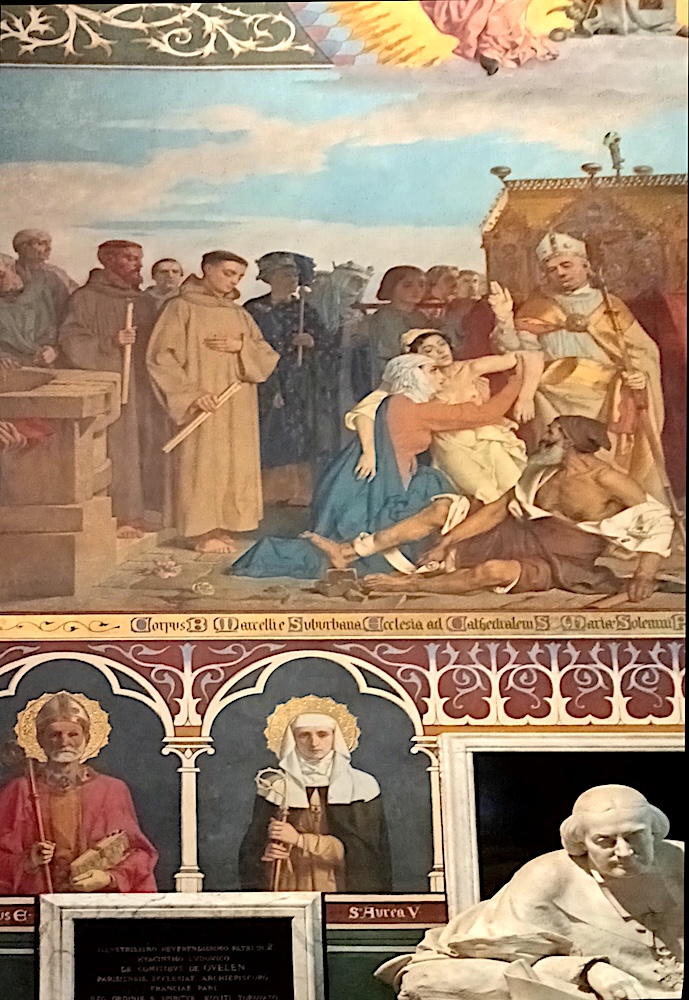
In the next apse chapel, dedicated to St Marcel, the saint's monogram (above left) now glows brightly again below the stained glass. The painting depicts "The Triumph of Saint Marcel" — the apotheosis of the saint, and the translation of his relics. This was painted by Théodore Maillot (1826-1888) between 1864 and 1868, and is above the marble tomb of archbishop Hyacinthe-Louis de Quelen (1778-1839), with Saint Eligius and Saint Aure (Aurea or Aurora) also visible here.
Chapel of St. George
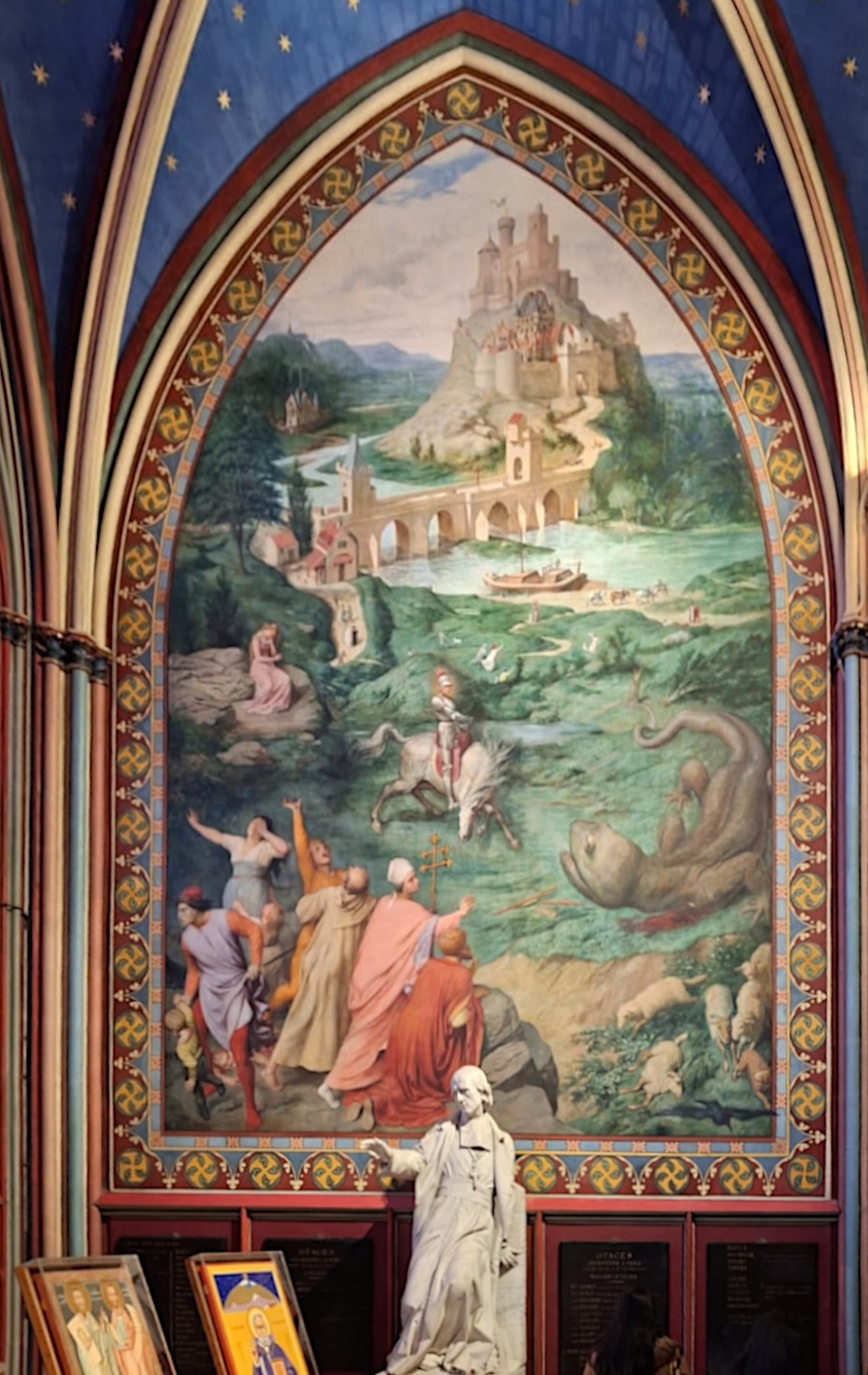
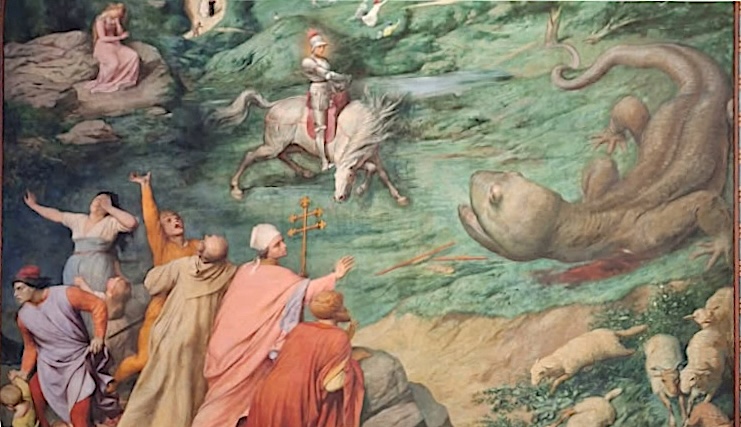
In this apse chapel (dedicated to the Christians of the Orient) St George is shown advancing to slay the dragon. A closer view of the central part is shown on the left. This fresco, by Louis Steinheil (1814-1885), is, in fact, in a style that was more reminiscent of the late Renaissance.
The Chapels of the Holy Oils, and of St. Germain
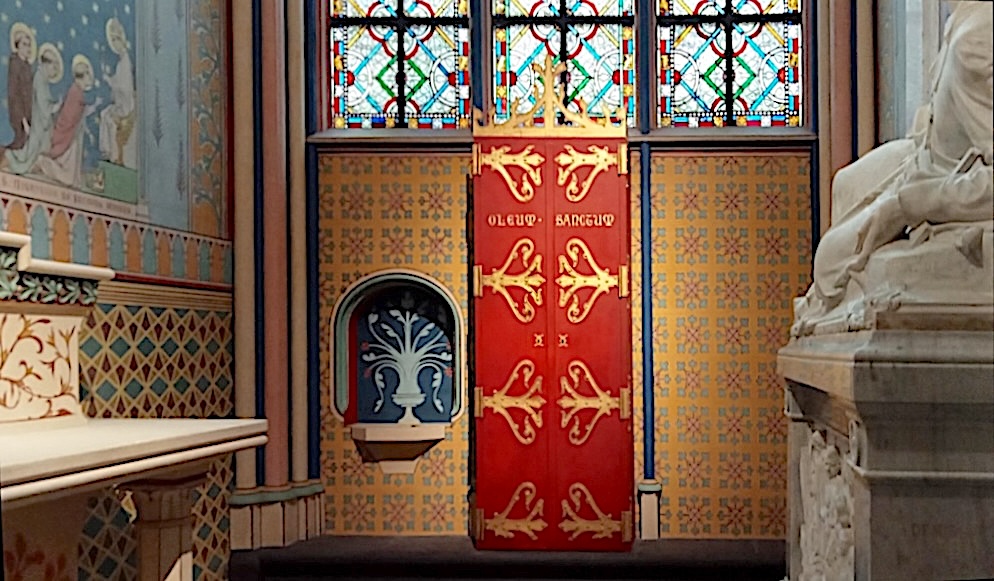
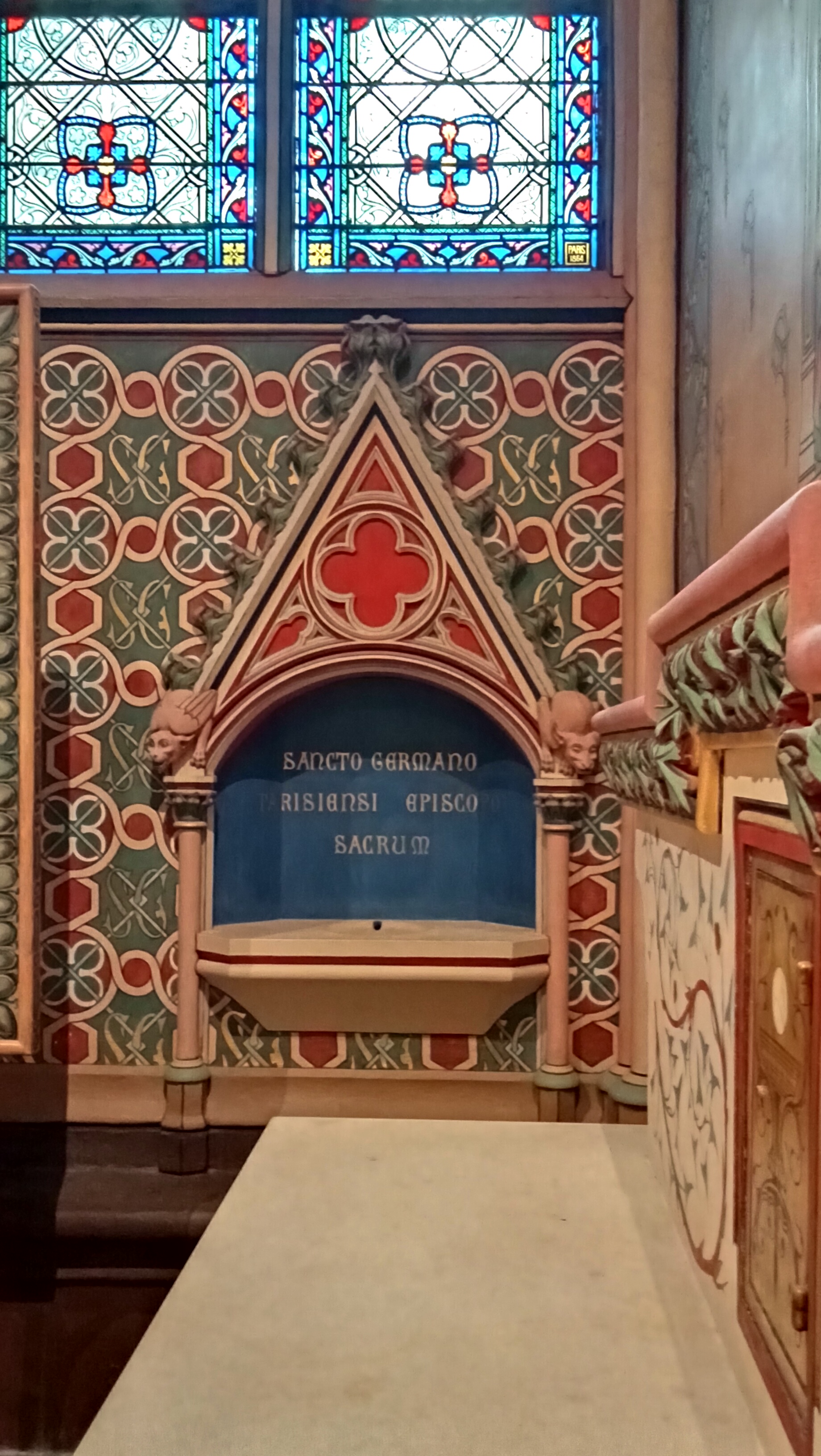
On the left is the splendid decor of the south wall of the Chapel of the Holy Oils (formerly the Chapel of St. Denis), after the original design of Viollet-le-Duc in 1860. On the right is the canopied alcove from the Chapel of St. Germain. As so often, one is aware that the architect is presenting splendid designs not to echo the past faithfully but to "fit his romantic vision [of] the middle ages" ("Viollet-le-Duc, Eugène").
Ornamentation and Design
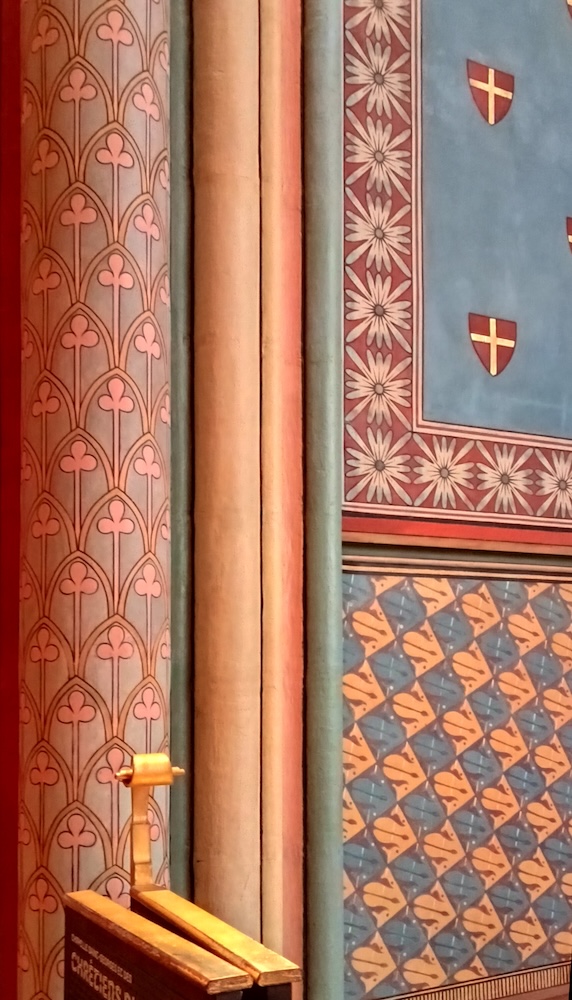
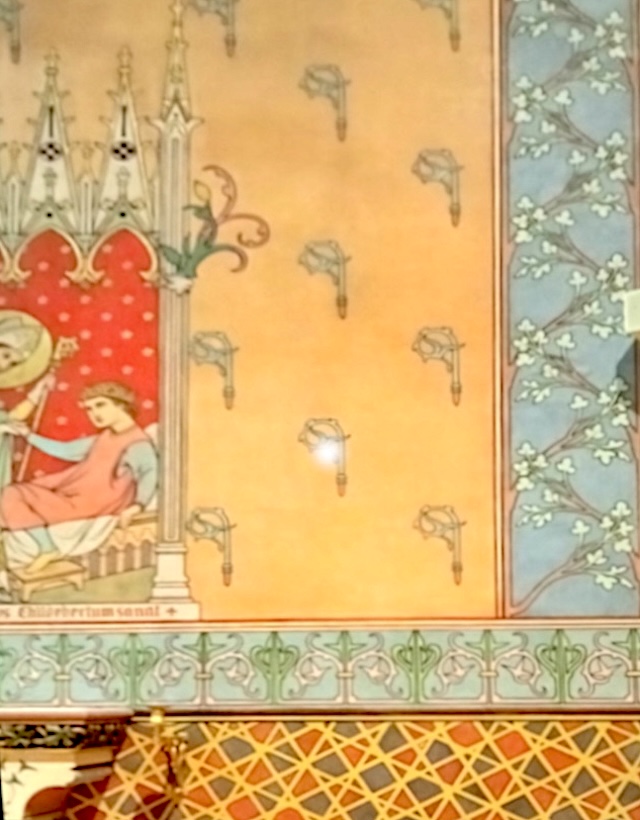
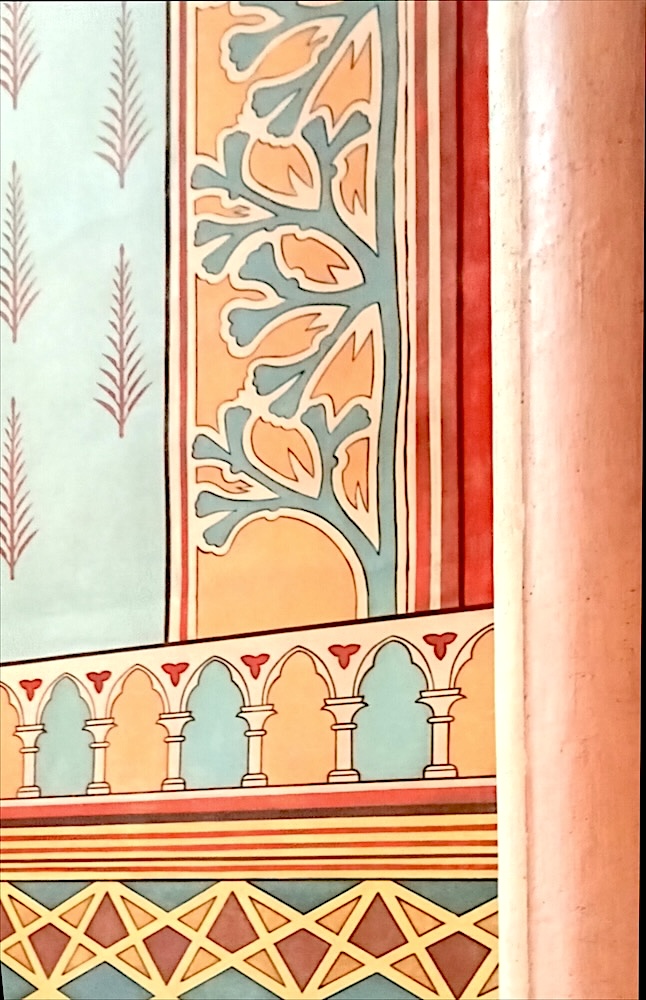
The original patterning on pillars, borders and backgrounds is now freshly restored, presenting rich and inventive backdrops or frames to the works of art in the individual chapels. Devices like the bishop's crozier (appropriately complementing a scene of healing, above centre), and imagery drawn from architecture or nature, both geometrical and fluid were used, in both primary and pastel colours. As, for example, in Plates I and II of the architect's Designs and Ornaments ("Paintings behind the Virgin"), the general impression may be a feast for the eye, but the particular relevance to the individual chapel makes it much more than simply an added, randomly applied, layer of ornamentation.
Those who worked on the main mural decorations of these chapels were important artists of the time: Maillot, for instance, would later depict the miracles of St. Geneviève (1885) in the Pantheon. Yet Viollet-le-Duc was proud, too, of the fact that the commissions for painted surrounds for such works had helped to revive artisans' workshops: "It would be interesting to give a list of all the ateliers that have been formed as the result of works of restoration, and to which the warmest opponents of undertakings of this kind have come in search of workmen and of methods" (53, n.). One should note that the other chapels also include various tombs or framed pictures from different periods, all with their own interest, even if they do not necessarily harmonise with the neo-Gothicism of the walls painted between 1864 and 1870.
Related Material
Photographs by the author. You may use these images without prior permission for any scholarly or educational purpose as long as you (1) credit the photographer and (2) link your document to this URL or cite the Victorian Web in a text document. [Click on the images to enlarge them.]
Bibliography
"Paintings." Notre Dame de Paris. Web. 10 December 2025. https://www.notredamedeparis.fr/en/understand/paintings/
"Viollet-le-Duc, Eugène." Dictionary of Art Historians. Web. 10 December 2025.
Viollet-le-Duc, Eugene-Emmanuel. Designs and Ornaments from the Chapels of Notre Dame (trans.). 1870. Rpt. Minneola, New York: Dover Publications, 2011. Google Preview.
Viollet-le-Duc, Eugène-Emmanuel, 1814-1879. On Restoration. London: Sampson Low, Marston Low, and Searle, 1875. (English version with a notice of his works, by Charles Wethered). Hathitrust, also available on Google Books as a free ebook. Web. 10 December 2025.
Created 10 December 2025